Blog

  • The Future of Digital Agencies: AI, Branding & Technology in 2025

    The Future of Digital Agencies: AI, Branding & Technology in 2025

    Why Digital Agencies Must Evolve

    Why Digital Agencies Must Evolve | ace360degree

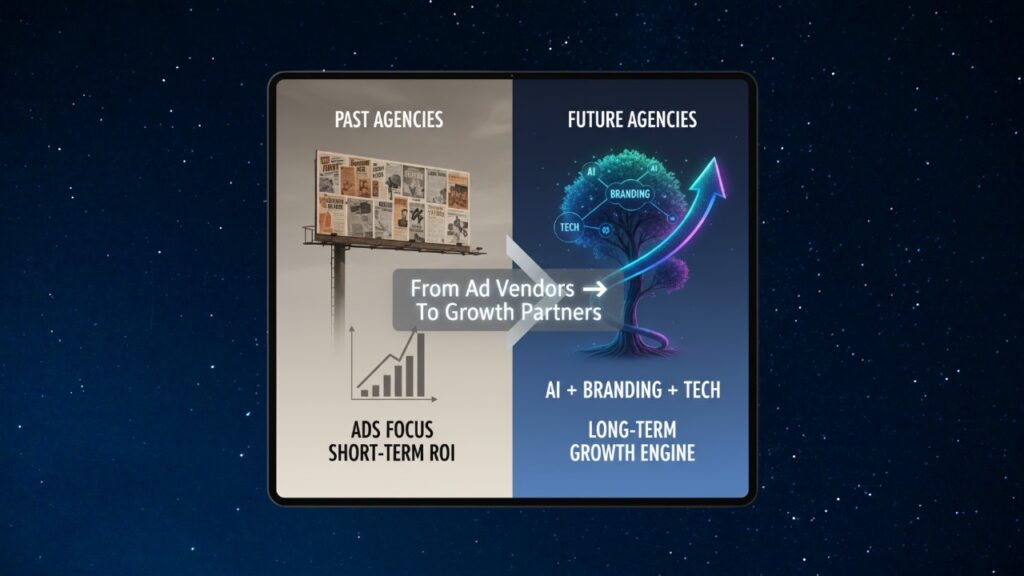
    The digital agency of yesterday — focused only on ads — won’t survive tomorrow.

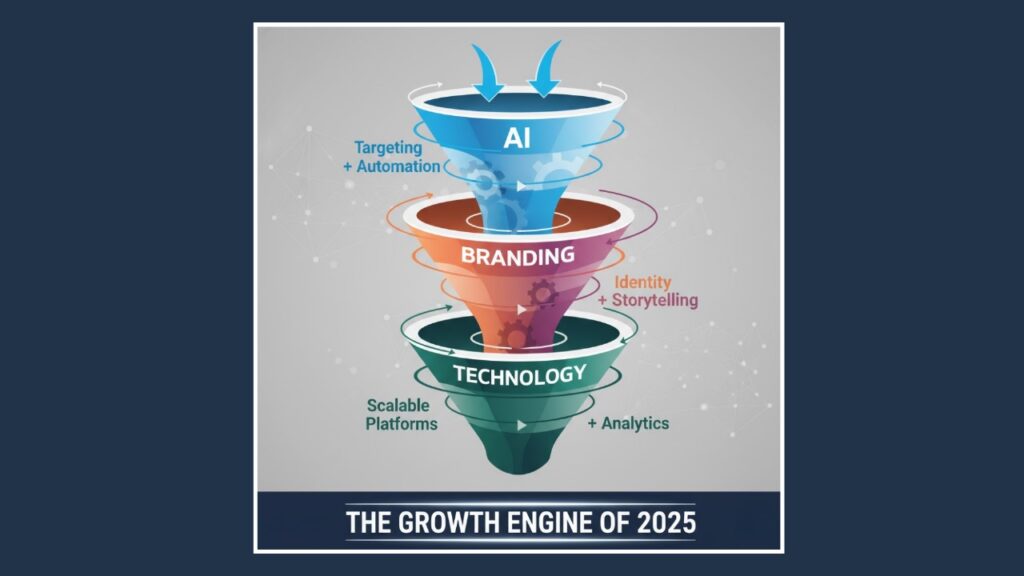
    In 2025, businesses expect more than campaigns. They need growth partners that combine AI, branding, and technology into one seamless system.

    That’s what the future of agencies looks like — and it’s already here.

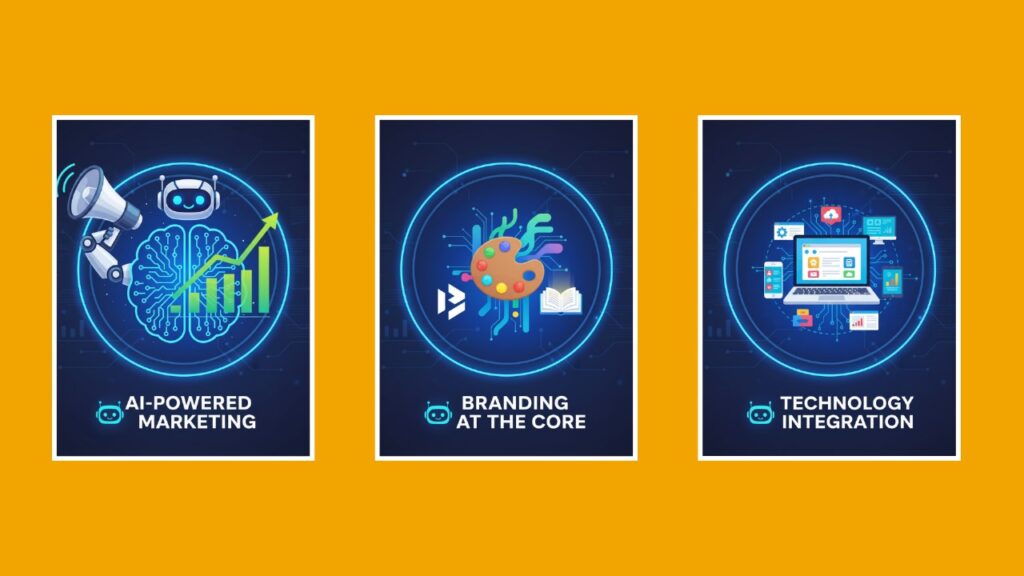
    Pillar 1 – AI-Powered Marketing

    Artificial Intelligence is transforming marketing.

    From data-driven targeting to real-time personalization and faster content creation, AI gives agencies the ability to scale smarter than ever before.

    Pillar 2 – Branding at the Core

    In an oversaturated digital world, strong branding cuts through the noise.

    The future of branding is about more than logos — it’s about storytelling, community, and emotional connection.

     Pillar 3 – Technology Integration

    Agencies that succeed in 2025 won’t just deliver ads. They’ll integrate:

    • Websites
    • Apps
    • CRM & automation
    • Analytics dashboards

    All driving measurable ROI.

     What Clients Should Expect in 2025

     What Clients Should Expect in 2025 | ace360degree

    The future agency isn’t just a vendor — it’s a growth partner

    Clients should expect:
    AI-driven insights
    Branding that builds trust
    Tech systems that scale

    Watch, Read & Explore

    YouTube Video (Full Breakdown):
    https://youtu.be/-VqV3rLmYD4?si=oVZgvrzeUmrZLvgp

    Reels/Shorts (Quick Insights):
    https://www.instagram.com/reel/DReJZ3eCJ7l/?igsh=Z2dqeWxmNm8xeTFj

    Carousels & Static Posts:
    https://www.instagram.com/p/DRRpY2Vkx2c/?igsh=MWo3eTE4c3VpNDczZQ==

    https://www.instagram.com/p/DRbeDBEE8XC/?igsh=MTg0a3NhcWxwaHFhdA==

    https://www.instagram.com/p/DRWVALnk68m/?igsh=MWtndjk2ajR2bTM5eA==

     About Ace360degree

    Since 2017, Ace360degree has been helping businesses grow through digital marketing, branding, and technology. From AI-powered strategies to tech-driven solutions, we build ROI-focused growth systems for our clients.

    📞 +91 7045 360 360 | 🌐 www.ace360degree.com | 📩 info@a360pl.com

  • Why Every Brand Needs a Content Marketing Strategy in 2025

    Why Every Brand Needs a Content Marketing Strategy in 2025

     Ads Stop. Content Doesn’t.

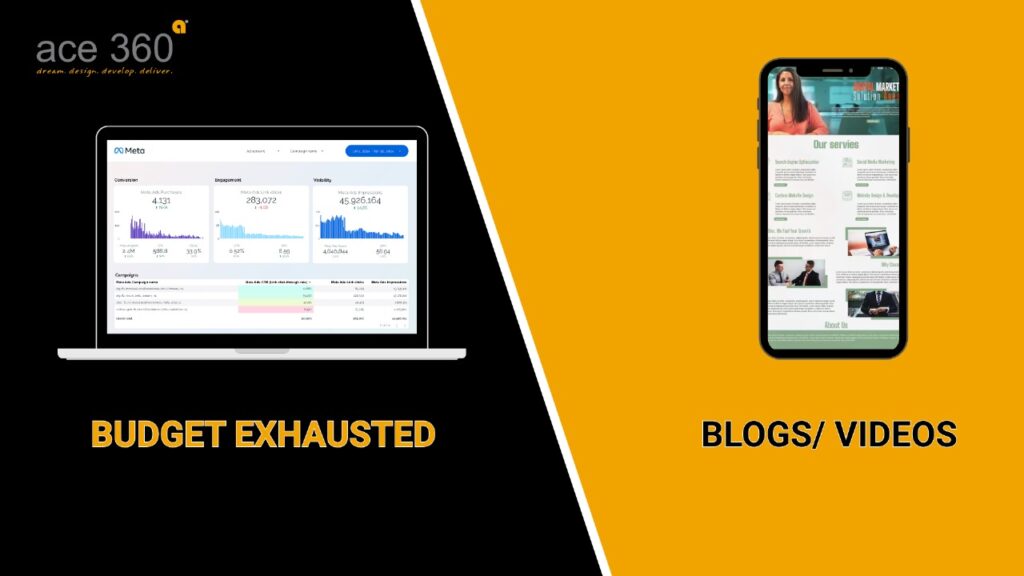
    If your ad budget stopped today, how long would your brand survive online?

    That’s the problem with relying only on ads. They deliver clicks as long as you keep paying. But the moment you stop, your brand disappears.

    Content marketing works differently. It compounds over time — building traffic, trust, and authority long after it’s created.


    5 Reasons Content Marketing Is Essential in 2025

    1. Sustainable Growth

    Ads = short-term boost.
    Content = long-term growth that keeps compounding.


    2. Builds Authority

    When your brand creates valuable content — blogs, videos, case studies — you position yourself as the expert people trust.


    3. Boosts SEO

    Google rewards useful, consistent content. The more you publish, the more you rank.


    4. Engages Customers

    Content educates, nurtures, and keeps customers connected across social, email, and video.


    5.Lowers Cost Per Lead (CPL)

    Ad costs are rising every year. Content lowers CPL by delivering ongoing traffic and leads without constant spend.


    Content Marketing Strategy in 2025

    The most successful brands aren’t choosing between ads and content. They’re using both:

    • Performance Marketing → to create reach and scale
    • Content Marketing → to build authority and trust

    Together, they create a sustainable growth engine.


    Watch, Read & Explore

    YouTube Video (Full Breakdown):
    https://youtu.be/KKhc94gvMT0

    Reels/Shorts (Quick Tips):
    https://www.instagram.com/reel/DQ6cVTcE7lT/?igsh=MWZneDNvNzhmN3hrbQ==

    https://www.instagram.com/reel/DQ_SaBJExTq/?igsh=MWZnN2lycmp0MWN2cw==

    https://www.instagram.com/reel/DREWuE4ExQn/?igsh=bzQwMWM5dWd5ams4

    Carousels & Static Posts:
    https://www.instagram.com/p/DQ3jw_CCFg_/?igsh=MXVxNndyNHMzZjRjZA==

    https://www.instagram.com/p/DQ8umQTk6zT/?igsh=dDV4OTg1d3pwMmt6


    About Ace360degree

    Since 2017, Ace360degree has been helping businesses grow through digital marketing, branding, and technology. From content strategy to SEO to performance marketing, we build ROI-driven solutions.

    📞 +91 7045 360 360 | 🌐 www.ace360degree.com | 📩 info@a360pl.com

  • Top 5 Website Mistakes That Kill SEO & Conversions in 2025

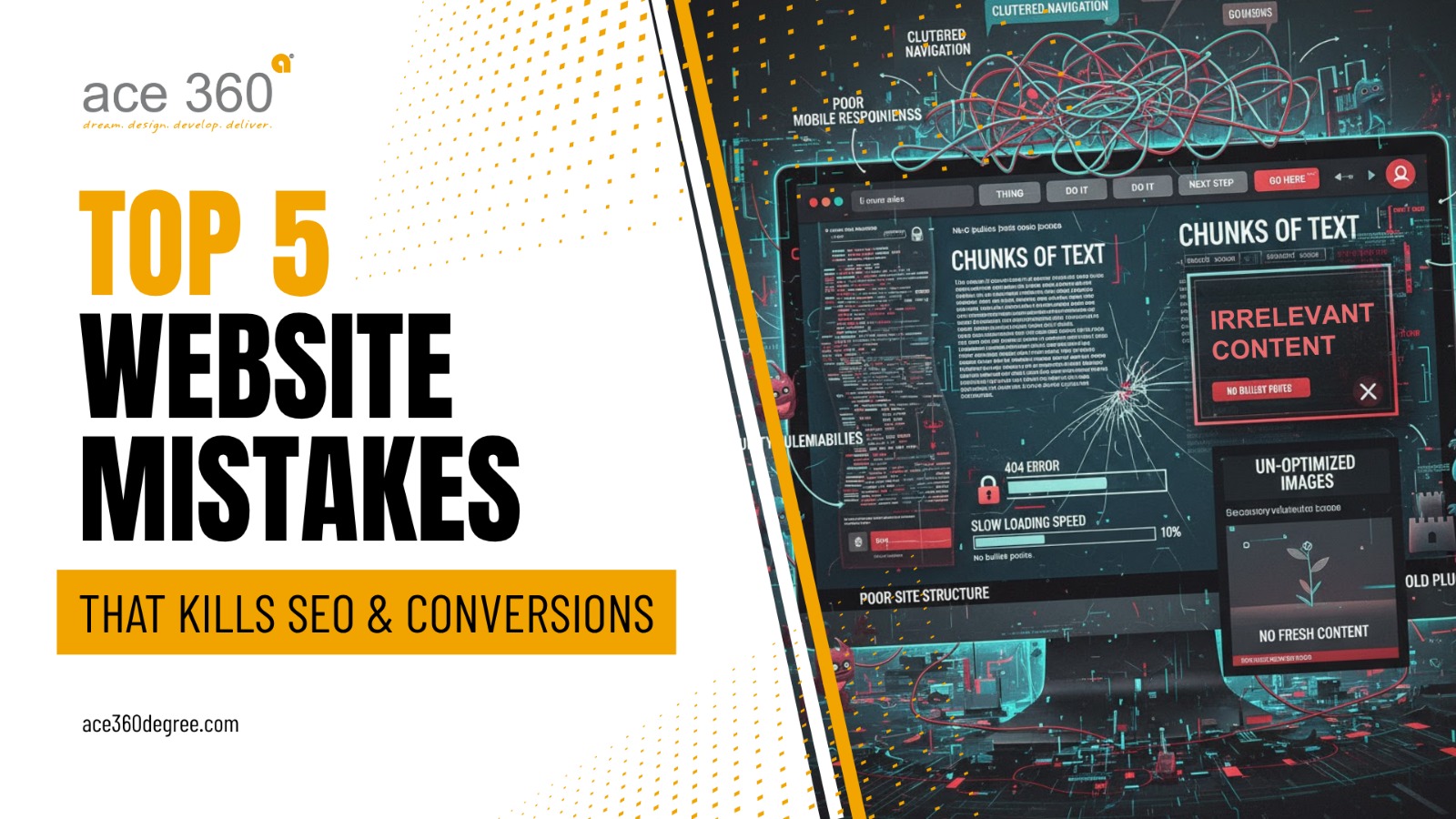
    Top 5 Website Mistakes That Kill SEO & Conversions in 2025

    Why Your Website May Be Failing

    In 2025, your website is still the center of your digital marketing ecosystem. But here’s the catch: even the most beautifully designed sites can fail to bring traffic or generate leads.
    At Ace360degree, we’ve audited dozens of websites and found the same mistakes repeated. These errors silently kill SEO rankings and conversions. The good news? Every single one is fixable.

    The 5 Mistakes to Avoid

    Slow Website Speed

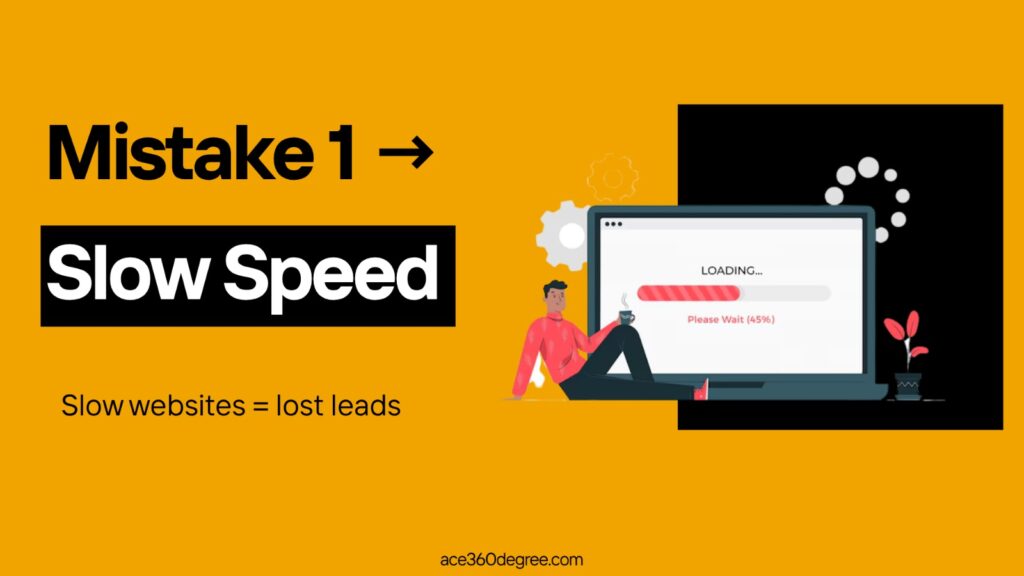
    Slow Speed | Ace360degree

    If your site takes more than 3 seconds to load, users bounce — and so do your rankings.
    Every 1s delay = -10% conversions.

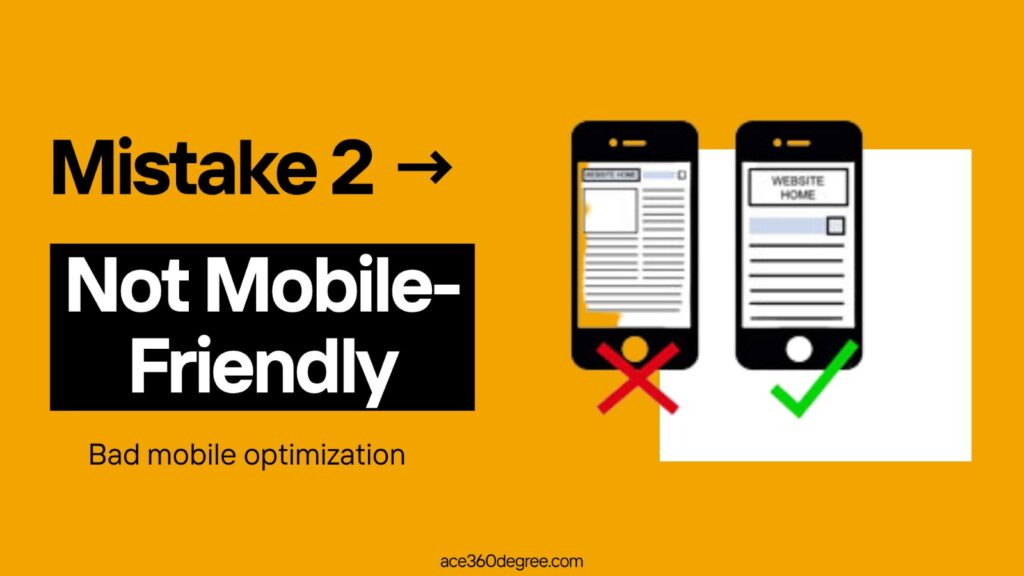
    Not Mobile-Friendly

    Not Mobile Friendly | Ace360degree

    With over 70% of web traffic now mobile, a non-responsive website is invisible to most users.

    Weak Content & SEO

    Week Content & SEO | Ace360degree

    Thin pages, duplicate content, and poor keyword targeting mean your site won’t rank.
    Content isn’t just for Google — it’s for customers too.

    Poor UX/UI

    Poor UI/UX | Ace360degree

    Cluttered designs, confusing navigation, and weak CTAs frustrate users.
    Confused users don’t convert.

    No Analytics or Tracking

    No Analytics Tracking | Ace360degree

    Without analytics, you’re flying blind. You can’t improve what you can’t measure.

    The Solution: All Fixable
    The best part? These mistakes are all preventable.

    1. Optimize site speed
    2. Build mobile-first design
    3. Write SEO-rich, helpful content
    4. Simplify UX with clear CTAs
    5. Install analytics & track performance

    At Ace360degree, we help brands design fast, SEO-ready, conversion-focused websites that don’t just look good — they drive growth.

    YouTube Video (Full Breakdown):

    https://youtu.be/YcxNjioELZY?si=g_OlMB_5o485X2s1

    Reels/Shorts (Quick Tips):

    Reel 1: https://www.instagram.com/reel/DQqqArzCMCW/?igsh=MWFlazBreWx4eDZpbQ==

    Reel 2: https://www.instagram.com/reel/DQvsDcjE_53/?igsh=OHQ2eHdycGFoa2h3

    Carousels & Static Posts:

    https://www.instagram.com/p/DQoci03E_aa/?igsh=czBzZjhuZWt2cnc4

    https://www.instagram.com/p/DQtHwcdk0sW/?igsh=MTE3Y2d4dG42MWk4Nw==

    LinkedIn Article:

    https://www.linkedin.com/posts/ace360degree_websiteaudit-seo-digitalmarketing2025-activity-7392818946862895104-ELhM?utm_source=share&utm_medium=member_android&rcm=ACoAAAXX34IBFJ2hAAaK7tPznT459VPlS4JNV0Q

    About Ace360degree

    Since 2017, Ace360degree has been helping businesses grow through digital marketing, branding, and technology. From website design to SEO to performance marketing, we deliver ROI-driven solutions.

    📞 +91 7045 360 360 | 🌐 www.ace360degree.com | 📩 info@a360pl.com

  • Meta Ads vs Google Ads: Which Drives Better ROI in 2025?

    Meta Ads vs Google Ads: Which Drives Better ROI in 2025?

    The Big Question Every Brand is Asking in 2025

    “Should I put my ad budget into Meta Ads or Google Ads?”

    It’s a question almost every business owner and marketer asks today. With rising costs across platforms, ROI isn’t about choosing one channel it’s about knowing how to use both strategically.

    At Ace360degree, we’ve helped brands scale across industries since 2017, and here’s what we’ve learned about the Meta vs Google Ads debate in 2025.

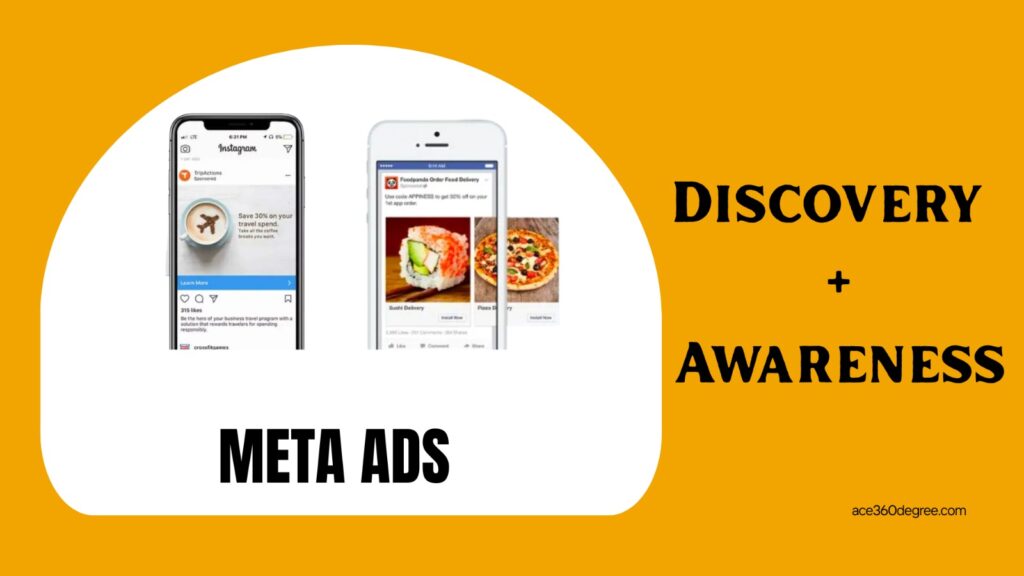
    Meta Ads: Awareness & Discovery

    Meta Ads: Awareness & Discovery | Ace360degree

    Meta Ads (Facebook + Instagram) are discovery-driven. They’re perfect when your audience isn’t actively searching for you but is open to discovering new products and services.

    • Build brand awareness
    • Boost visibility & recall
    • Drive impulse conversions

    ROI depends heavily on creative quality and audience targeting

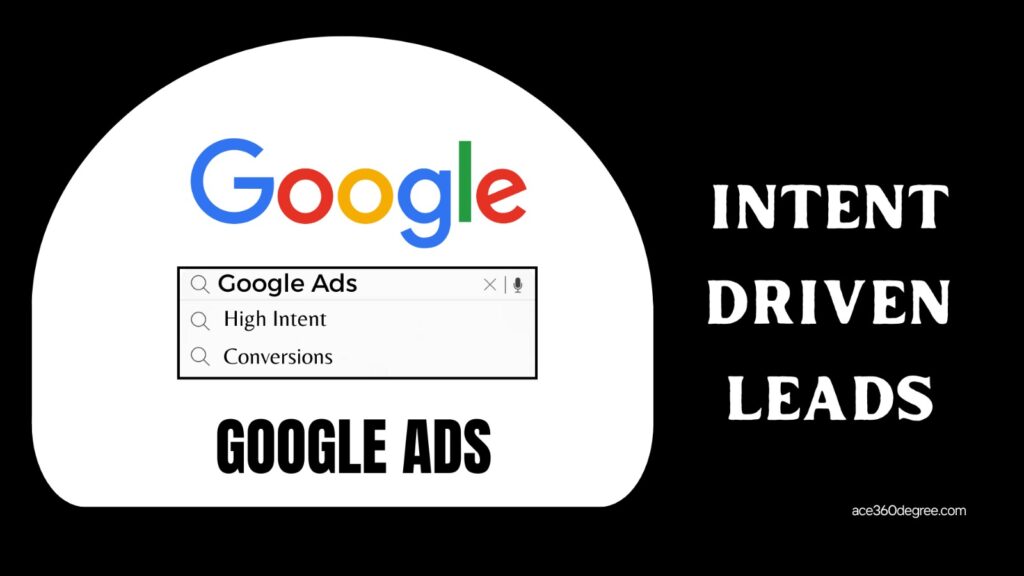
    Google Ads: Intent & Conversions

    Google Ads: Intent & Conversions | Ace360degree

    Google Ads work differently — they capture intent. People searching already know what they want. That’s why it’s perfect for lead generation and high-ticket conversions.

    • Capture high-quality leads
    • Work well for service-based & high-ticket products
    • Integrates across Search, Display, and YouTube

    CPC is rising in 2025, so optimization is crucial

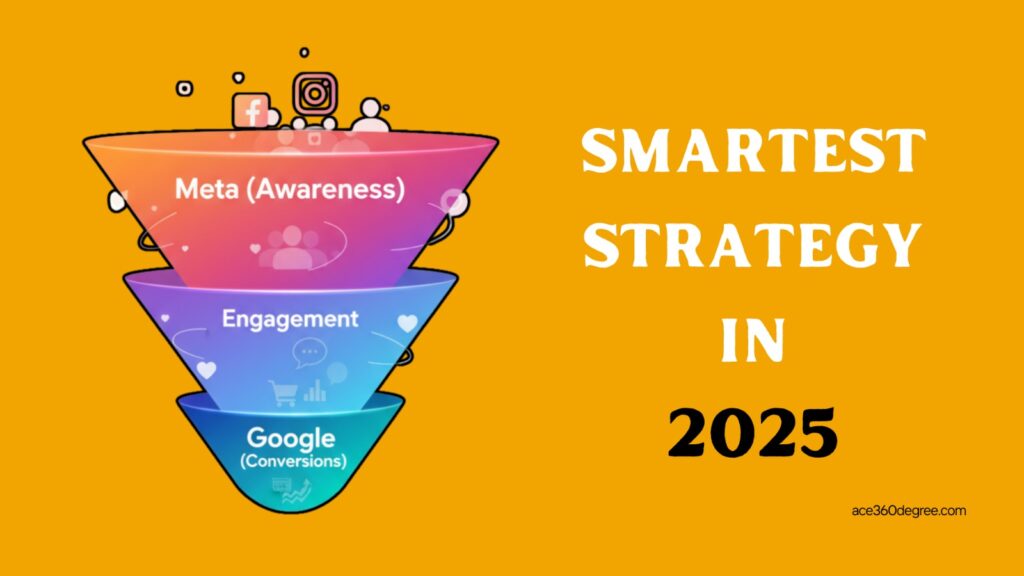
    The Smartest Strategy in 2025

    The Smartest Strategy For Meta & Google Ads in 2025

    Brands that get the highest ROI in 2025 don’t choose between the two. They use both:

    • Meta Ads to create demand & build awareness
    • Google Ads to capture that demand when intent is highest

    This synergy delivers sustainable, scalable results.

    Watch the full breakdown on YouTube:


    Reels/Shorts (Quick Insights):

    Carousels & Static Posts (Visual Summaries):

    LinkedIn Article:

    https://www.linkedin.com/posts/ace360degree_ace360degree-digitalmarketing-metaads-activity-7380200858572980224-89fp?utm_source=share&utm_medium=member_android&rcm=ACoAAAXX34IBFJ2hAAaK7tPznT459VPlS4JNV0Q

    About Ace360degree

    Since 2017, Ace360degree has been helping businesses grow through digital marketing, branding, and technology. From performance marketing to content strategy, we build ROI-driven solutions for sustainable growth.

    📞 Contact: +91 7045 360 360
    🌐 Website: www.ace360degree.com
    📩 Email: info@a360pl.com

  • Top Social Media Marketing Trends for 2023

    Top Social Media Marketing Trends for 2023

    Introduction

    Social media has changed a lot in the last decade. Over the years, we’ve seen platforms come and go, new features added and taken away, and the way people interact with their friends and family evolve. We’ve also seen social media marketing strategies change as they adapt to these changes.

    In this post, we’ll cover some of the biggest social media trends you can expect to see over the next few years.

    Influencer Marketing

    Influencer marketing is a new way to market your brand. Influencers are people who have a large following on social media and can be paid or unpaid. They can be celebrities, bloggers, or even your customers.

    Influencers are often sought after by brands because they have the ability to reach thousands of people in their network. This means that they can promote your business effectively without you having to spend much time or money on advertising campaigns.

    Live Streaming

    Live streaming is a great way to engage with your audience and increase your reach. It’s also a great tool to build your brand, generate revenue, and test new ideas before fully launching them.

    Live streaming can be used in many ways:

    As part of a larger campaign

    As a standalone campaign

    For branding purposes (for example, showcasing your office or team)

    As part of an event (like a conference)

    Or simply to connect directly with your audience

    Content Marketing

    Content marketing is the act of creating, publishing, and distributing content to attract, acquire, and engage a clearly defined target audience.

    It includes various formats such as:

    Blogs

    eBooks

    Whitepapers

    Videos

    Webinars

    Podcasts

    Infographics

    Well-planned content marketing strengthens your brand’s voice and builds long-term relationships with your audience.

    Chatbots for Social Media

    Chatbots are the future of social media — and there’s no doubt about it. Every day, more businesses use chatbots to improve customer service and boost sales.

    Chatbots are automated programs that respond to questions or comments from users in real time on websites or apps. They’re typically used for customer service (responding to inquiries), but can also be used for content creation and advertising (like promoting products).

    Example:

    Netflix uses AI tools like natural language processing (NLP) to power its customer service bot “Monica.”

    The goal was not only to reduce costs from hiring human agents but also to improve efficiency and accuracy above 95%.

    Social Media Shopping

    Social media platforms have made shopping easier — and more users are embracing it. A recent study found that nearly half of all social media users have purchased a product on platforms like Facebook or Twitter in the last 12 months.

    While most purchases are small (like tickets or clothing from influencer posts), it shows that consumers are increasingly using social media as a shopping destination.

    Marketers can sell directly via:

    Ads: Running targeted ads on platforms like Facebook, Instagram, and LinkedIn.

    These can target audiences by demographics (age, gender), interests, or behavior — ensuring your product reaches people most likely to buy.

    Augmented Reality (AR) on Social Media

    Augmented Reality allows digital information to be overlaid on the real world. It’s used for experiences like sharing real-time locations or viewing virtual exhibits in museums.

    Although AR has existed for decades, modern smartphones now have powerful cameras and processors that make AR experiences seamless and interactive.

    Benefits of AR Marketing:

    It’s more engaging than static images — users must interact with the content before seeing results.

    It encourages repeat visits from curious users.

    No special setup or equipment is needed — just a smartphone or tablet.

    AR is quickly becoming a powerful marketing tool for enhancing engagement and brand recall.

    Social Media Sites Are Evolving — You Need to Adapt

    Social media is constantly evolving, and you need a strategy that keeps up with the latest trends.

    The best way to stay relevant is to continuously monitor what’s happening on major platforms and adapt your marketing efforts accordingly.

    To help you stay ahead, we’ve compiled this list of the top social media marketing trends for 2023.

    Conclusion

    We hope you’ve found this article helpful — and that it gives you insights into the future of social media marketing.

    Keep testing, learning, and adapting to new trends, and you’ll keep your brand thriving in the years ahead.
  • Best Social Media Marketing Strategy for 2023

    Best Social Media Marketing Strategy for 2023

    Introduction

    Social media is an incredibly powerful tool, but it can also be a minefield if you don’t know what you’re doing.

    As platforms change and evolve, it’s important to create a strategy that will help your brand stay relevant.

    Pay attention to the algorithm

    The algorithm is the secret sauce of social media. It determines what you see in your feed, and it’s constantly changing as platforms like Facebook try to keep you engaged with more relevant content.

    The algorithm is designed to show you content that is relevant to you — and it does this by taking into account what people like and comment on, who else has liked or commented on the same thing (for example, if someone shares an article about dogs, then all the other people who share articles about dogs will also be shown), and how long they spend reading something before scrolling past it or clicking away.

    This helps ensure that advertisers aren’t paying for ads no one sees.

    Listening and responding to your audience is crucial.

    Listening allows you to understand what people are saying about you, which can help inform future marketing efforts.

    Responding shows that you care about the opinions of those who interact with your brand — increasing trust and loyalty in return.

    It’s important not only for building strong relationships but also for keeping an eye on potential problems so they don’t get out of hand.

    For instance, if someone complains about a problem with a product on Twitter or Facebook, responding quickly might prevent them from switching brands — or at least keep them happy enough not to go public with their complaint!

    Stories and Live Videos

    Stories

    Live Videos

    Stories and live videos are engaging formats that help brands connect authentically with their audience, promote transparency, and drive real-time engagement.

    Influencer marketing

    Influencers are people who have a large following on social media, and they can be used for marketing purposes.

    For example, an influencer could receive payment from a brand to promote their product or service. This can be done through paid advertisements on social media channels like Instagram, Twitter, and Facebook where the influencer has a large following.

    Influencers can also be used to build communities around products or services that are not yet established in the marketplace by creating content around them so consumers learn more before purchasing.

    Collaboration with other brands

    Find the right influencers: You can find influencers on social media by searching for hashtags, checking out who your competitors are working with, or finding them through an agency.

    If you’re looking for a specific type of person (for example, a blogger), you may want to narrow down your search by location — it’s easier for people in the same city or state to collaborate than for those who live far apart.

    Work with influencers: Once you’ve found someone who seems like a good match, reach out via email and ask if they’re interested in working together on a project or campaign.

    It’s always best if both parties agree before moving forward; sometimes people aren’t comfortable being featured on someone else’s website without compensation (and that’s fine).

    Expectations: Influencer marketing isn’t just about exposure — it should also help increase sales conversions if done correctly.

    The key is ensuring consistency between both teams’ messaging so there’s no confusion among consumers when they see content across multiple platforms at once.

    Without a strategy, you might find it difficult to keep up — so plan ahead

    Plans are only as good as their execution, and without a strategy, you might find it difficult to keep up with the changing landscape of social media marketing.

    Even if you have a plan in place and are sticking to it, it’s still important to make sure that your efforts align with current trends and opportunities.

    Planning ahead allows you time to identify what works best for your brand before implementing any changes or new campaigns.

    You can also use this time to test new things — like experimenting with different types of content — and then revisit those options later when they’re proven successes.

    Conclusion

    Social media is a fluid and ever-changing landscape, which means you need to keep up with the trends.

    The best way to do that is by developing a strategy, so you can stay ahead of the curve and ensure your brand’s voice is heard by its audience.

  • Social media marketing is a strategy used by businesses to attract and retain customers

    Social media marketing is a strategy used by businesses to attract and retain customers

    Introduction

    Social media marketing is a type of digital marketing that involves using social networks like Facebook, Instagram, and YouTube to promote your business.

    What is social media marketing (SMM)?

    Social media marketing (SMM) is a form of online marketing that uses social media platforms to promote products and services.

    It can be considered an extension of brand advertising but with a new set of communication channels.

    The goal of SMM is to increase awareness about your brand, drive traffic to your website, and build relationships with customers through social networking sites such as Facebook and Twitter.

    Social media marketing can also be used for branding purposes by creating content that resonates with target audiences on different platforms such as blogs or company websites, YouTube videos explaining how certain products work, or podcasts featuring interviews with industry experts.

    Social media marketing explained

    Social media marketing is a form of internet marketing that uses social networking sites to promote brands, products, and services.

    It can be used by businesses to build their brand, increase sales, and create customer loyalty.

    Social media has become an essential tool for companies looking to connect with customers in real time, on top of traditional channels like email newsletters or print brochures—which are still important but don’t provide immediate feedback like social platforms do.

    How social media marketing works

    Social media marketing (SMM) is a form of digital marketing that uses social media platforms to advertise products and services.

    It also helps build a brand, engage with customers, promote content, and drive traffic to websites.

    Popular social media platforms include Facebook, Instagram, Twitter, and LinkedIn.

    Pros of social media marketing

    Social media marketing is a great way to build your brand.

    It can help you reach a wider audience, generate leads, increase sales, and improve customer service.

    Cons of social media marketing

    Social media marketing is not a quick fix.

    It’s a commitment to your brand, and it takes time to see results. You must be consistent with your posts and know what tools are available to use them effectively in building relationships with customers and prospects.

    In addition, there are many tools that must be learned in order for SMM efforts to succeed, such as:

    Social media scheduling software (e.g., Hootsuite)

    Monitoring tools such as Google Alerts or Mention

    Analytics reporting software

    SMM might not be the best option for all businesses

    SMM may not be the right fit for all businesses.

    If you’re selling a product or service that doesn’t lend itself to social media, then SMM might not be an effective way to reach your target audience.

    For example, if your business sells only one type of product and does not have a strong social media presence, then spending money on SMM could be an unnecessary expense.

    For those who decide that SMM is worth using as part of their marketing strategy, there are several ways in which it can help.

    Conclusion

    In conclusion, social media marketing is a great way to reach a wide audience and build brand awareness.

    It has some drawbacks, but these can be overcome with careful planning and execution.

  • Top Advantages of Ecommerce Website for Business Growth

    Top Advantages of Ecommerce Website for Business Growth

    In today’s time, there are many platforms available where you can advertise and sell your products online. For example, Amazon and Flipkart are popular platforms for showcasing your line of products here in India. However, there are many drawbacks to advertising your products on these platforms that e-commerce businesses often overlook.

    The benefits of getting your own e-commerce website far outweigh the advantages that these platforms provide. Below are the top reasons to have a self-hosted e-commerce website.

    1. Full control

    Since your e-commerce website is hosted on your own server, you have full control of the website and can make any required changes like updating product information, changing prices, deleting products, etc., at any given time.

    If you have products on third-party websites, making changes is difficult because it has to go through a certain process. So, you have to plan in advance, as you cannot make immediate changes.

    2. Minimal effect by changes in policies

    Having your products on third-party websites means you must comply with the terms, conditions, and policies listed by that website.

    Violation of any such policy can attract penalties or the risk of having your products taken down. This may subsequently impact your revenue. Also, changes in governmental policies can affect the revenue of these third-party websites. Taking this into consideration, they might decide to shut down their website or move their business out of that country entirely. You’re then left with no option but to have your own website.

    Though you still have to comply with basic e-commerce requirements, on your own self-hosted e-commerce website, you’re your own boss. You can change things on the website as and when you require, without fearing compliance issues.

    3. High Commission Rates

    Third-party websites often charge high commission rates to display your products. This makes the product prices more expensive for the end customer. Moreover, you can’t offer discounts to customers if the policy of that website doesn’t allow it.

    Since a self-hosted e-commerce website allows you to set your own prices, you’re free to change the prices at any time. Additionally, you can offer discounts whenever you wish to boost sales.

    4. Add-on functionality

    With your self-hosted e-commerce website, you can add any additional functionality desired for your website. This could be a live chat to interact with real-time visitors or embedding your Instagram gallery. Since you have total control, the possibilities are endless.

    There is no doubt that a self-hosted e-commerce website will benefit your business more than simply posting products on other websites.

    Businesses sometimes view this as a major expense, but when you take the above points into consideration, it clearly offers a significant return on investment.

    Start getting new customers by creating your own e-commerce website from the best e-commerce website service provider in Mumbai, India. Contact us today to see how we can help.

  • Advantages of Digital Marketing that may Help Your Business

    Advantages of Digital Marketing that may Help Your Business

    Discover how efficient digital marketing services can propel your business.

    Digital marketing has changed people’s perception of the normal business landscape. The dynamic aspects of digital marketing have permeated into the functional core of each business, and its myriad advantages have provided a lucrative and cost-efficient opportunity for medium-to-small business owners to propel their offerings onto the worldwide market.

    Efficient digital marketing deploys a variety of techniques, some are:

    Social Media Marketing

    Online Reputation Management

    Search Engine Optimization

    Content & Email Marketing

    Google Ads

    Depending on the budget, nature of objectives the business wants to achieve, and other considerations, digital marketing services can craft customized solutions using a hybrid mixture of these techniques.

    Benefits Digital Marketing Offers Businesses

    Cost-efficiency

    Digital marketing tactics and methods provide businesses with more control over expenditures. This is because they are the ultimate deciders on which digital marketing techniques they want to factor into their marketing plans.

    Easy Monitoring of Results

    The progression and consequences of any digital marketing service can easily be determined. This is in stark contrast to traditional methods, where a substantial amount of waiting is required to reliably evaluate the impact of a campaign or advertisement.

    Wider Reach

    Through digital marketing services, businesses can accurately pinpoint the precise audience they need to focus on. For example, even without using online ads, an SEO-optimized website can still help businesses tap into new markets and reach a global audience in a cost-efficient manner.

    Experience the Digital Marketing Difference Yourself

    Full-fledged digital marketing agencies have years of relevant experience across diverse industry verticals. Specialized category-based review websites, including SoftwareWorld, can provide you with a list of the best-ranked digital marketing agencies to craft flexible and cost-efficient solutions for your business.

  • 8 Principles of Design (and a way to use them)

    8 Principles of Design (and a way to use them)

    There’s much debate over exactly what number of principles of design exist. Some designers say 7, others 12, and still others here-and-there in between. But when it involves design principles, numbers aren’t the important thing.

    Principles of design give designers a collection of guidelines for the way to style visually appealing compositions that make wonderful user experiences.

    By following basic principles of design like hierarchy, balance, unity, and variety, you’ll create digital products and graphic designs that folks like to use.

    The 8 principles of design every graphic designer should be familiar with:

    1. Hierarchy

    2. Balance

    3. Alignment

    4. Emphasis

    5. Proportion

    6. Movement

    7. Negative Space

    8. Contrast

    1. Hierarchy:

    Visual hierarchy may be a vital part of good design. If everything on your page appears like it’s the identical importance, then nothing appears important. You wish to use visual cues to inform people what to listen to first, second, third, etc.

    Create optical hierarchy through things like scale (the relative size of elements) and color. Typographic hierarchies are often created by using different typefaces, sizes, and font weights.

    The point is to create sure the foremost important element on the page stand out among the remainder.

    2. Balance:

    Balance within a composition is achieved in a number of other ways. The symmetrical balance is the most straightforward. It’s achieved when elements on either side of a central vertical axis are identical. As an example, two text blocks on either side of the page would create a symmetrical balance, whether or not the content of these blocks wasn’t identical.

    Asymmetrical balance is achieved when the weather on either side of a central axis is not identical. As an example, you may have an outsized image on one side balanced out by prominent text on the opposite. It may be achieved when the vertical axis that divides two elements isn’t placed directly within the center of the page. In this case, the narrower element should have a “heavier” visual weight than the broader one to attain a balanced look.

    Whichever sort of balance technique you utilize, the result should feel right. It should give the viewer a way of harmony and not make them feel uneasy.

    3. Alignment:

    Alignment refers to how a text or graphic elements are lined au courant a page. This could check with their alignment in regards to the whole composition (left, center, or right-aligned) yet as their alignment to at least one another.

    When elements aren’t aligned properly, especially in respect to each other, it adds a way of chaos to the composition. It’s haphazard and messy.

    When it involves this principle of design, make certain to align elements properly in regard to each other, and be according to the alignment of assorted elements, like always centering headlines.

    4. Emphasis:

    Emphasis is that part of a design that catches the attention of the user—a point of interest, in other words. Ideally, this could be the foremost important part of the look, whether that’s the headline, an image, or a CTA. But that doesn’t always happen.

    Inexperienced designers may inadvertently emphasize the incorrect parts of the page, creating confusion on the part of the user.

    Be sure to emphasize the parts you would like your users to appear initially. You’ll try this through things like scale, white space, color, shadow, pattern, or other techniques.

    5. Proportion:

    Proportion, also named as scale, is the relative size of objects within a design. Elements that are larger in regard to others will stand out more and appear to own more importance to users. Smaller elements appear less significant.

    Use proportion to form visual interest by drawing the viewer’s eye to particular visual elements within your designs.

    Just detain mind that an excessive amount of difference within the scale of things can make the littlest items stray entirely, or make the most important ones appear comically large.

    6. Movement:

    Manoeuvre refers to the way a user’s eyes move across your composition. Dynamic designs encourage plenty of eye movement, while static ones encourage less. The straightforward designers can, to an extent, control which elements users specialize in by placing them along the trail of the foremost natural eye movement patterns.

    It’s important to familiarize yourself with the supreme common eye movement patterns, F- and Z-patterns, and therefore the cake pattern. F- and Z-patterns are more common on image- heavy pages, while the cake pattern is facilitated by plenty of text with headings and subheadings.

    7. Negative Space:

    Negative space in a design, also called white space, is space that has no design elements (other than possibly a background color or subtle pattern or texture).

    As a design principle, negative space is crucial because it gives the weather in your composition room to breathe. Without white space, pages look disarranged and are hard to navigate.

    Be sure to go away some space around elements on your pages, especially the preeminent important ones. This white space makes them stand out more and facilitates an improved user experience.

    8. Contrast:

    Contrast may be achieved through color, shape, size, or similar properties of elements, and refers to the differences between them. Color contrast is commonly the primary thing people consider, but differences within the sizes of elements, their shape, or other properties also create contrast.

    Contrast serves two vital functions. First, it allows you to form elements that stand out from each other. A whole lack of contrast would end in a design that’s simply one background color with no other visible elements, not exactly a functional design.

    How to apply the principles of design

    Learning and following established design principles in graphic design allows you to form more cohesive designs that delight users and offer exceptional user experiences.

    Disregarding these principles of design should be through with caution, and only after you have got an intensive understanding of them and therefore the purposes they serve.